
A new case out of the Fifth Circuit addresses seaman status for a welder. The welder was employed by a contract company. During his employment with the contractor, the welder worked “on various rigs, barges, and vessels” owned by the contractor’s clients. But, “he spent less than thirty percent of his time in service of any one vessel or group of vessels.” One day, the welder went to work on a barge, the D/B SUPERIOR PERFORMANCE, and he was injured in a gas explosion while welding inside a well platform. At the time of the accident, the welder was working a job that was scheduled to last two months. An important issue in the welder’s case was whether he was a “seaman.” The Supreme Court has articulated a two-prong test to determine seaman status under the Jones Act: An employee’s duties must contribute to the function of the vessel or to theRead more
The Zone of Special Danger Applies to Local Nationals
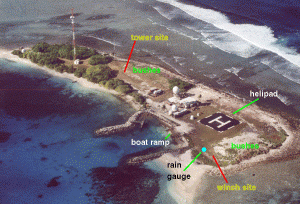
A new Benefits Review Board case addresses an interesting zone of special danger issue. Specifically, the case addresses the applicability of the zone of special danger doctrine to a local national employee who was injured in his home country. Factual Background: In Jetnil v. Chugach Management Services, the employee was injured while he was fishing on the reef at Gagan Island (part of the Republic of the Marshall Islands). The employee slipped and cut his foot on the coral. His cut developed into a serious medical condition, ultimately requiring a below-the-knee amputation. As with all zone of special danger cases, the obligations and conditions of the injured worker’s employment are incredibly important. Here, the employee was a citizen of the Republic of the Marshall Islands. He resided on Kwajalein Atoll, which is also home to the U.S. Army Space and Missile Defense Command’s Ronald Reagan Ballistic Missile Defense Test Site. The employeeRead more
How Do Longshore or Defense Base Act Trials Work?
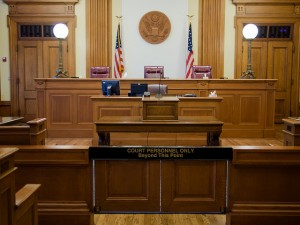
The administrative hearing process is foreign to most Longshore or Defense Base Act claimants. They have never been to an administrative hearing. They do not know how long it will take to get a hearing or a decision. They do not know what actually happens at the hearing. The good news is that there are online resources that can demystify the process. To get started, let’s have a quick rundown of the process that takes a case from the Division of Longshore and Harbor Workers’ Compensation (DLHWC) to the Office of Administrative Law Judges (OALJ). All Longshore and Defense Base Act cases start at the DLHWC. As the case develops, a dispute may arise. The dispute could be anything from a denied medical benefit to a complete and total claim denial. If the parties cannot resolve the dispute at the administrative level, then a party may request referral to the OALJRead more
Consider the WHCA in Every Defense Base Act Claim

I have mentioned before that, when I first analyze the facts of a Defense Base Act case, I consider whether the War Hazards Compensation Act applies. This post addresses a tangential question: what happens when a lawyer does not consider the War Hazards Compensation Act? The Defense Base Act: The Defense Base Act (or DBA for short) is a system of federal workers’ compensation that applies to many overseas contractors. When a contractor working on an overseas base or under a U.S.-funded contract is injured, that injury and the resulting disability may be covered by the DBA. If it is, then the injured worker is entitled to indemnity benefits, as well as reasonable and necessary medical benefits. The War Hazards Compensation Act: The War Hazards Compensation Act (or WHCA for short) is sort of a companion to the DBA. The only part of the WHCA that is important for thisRead more
Working Conditions Can Cause Compensable Injuries

An employee’s injury does not have to be caused by a specific traumatic event. Working conditions alone can be sufficient to cause a harm and a compensable disability. Some people do not understand the “injurious working conditions” concept. So, let’s start at the beginning: the prima facie case. When a claimant initiates a Longshore or Defense Base Act claim, they must prove two things: They suffered some harm or pain; and Working conditions existed or an accident occurred which could have caused the harm or pain. If the claimant successfully proves these two things, then they are entitled to the Section 20(a) presumption. See 33 U.S.C. 920(a) (1984). Affirmative medical evidence is not absolutely necessary, but it is helpful. The Section 20(a) presumption is a powerful tool. After the prima facie case is proven, the Longshore and Defense Base Acts presume that the worker’s injury falls under the purview of the applicable Act. Further, the presumptionRead more
Publications For the Longshore and DBA Community

It is time to take a look at what is happening around the Longshore and Defense Base Act world: The LexisNexis Workers’ Compensation Law Community has published quite a few articles about Longshore and DBA matters. Check out: Employee’s Death in Tax Accident While He Shopped for Groceries Found Compensable Under Defense Base Act by Thomas Robinson. D.C. Circuit Court Dismisses RICO Action for Alleged Tortious Conduct Related to Defense Base Act Claims, also by Thomas Robinson. 2015 Update from the Benefits Review Board by Karen Koenig, Associate General Counsel, Longshore Division, U.S. Department of Labor. In addition to discussing the new Benefits Review Board judicial appointees, the article touches on Section 49 discrimination. The Office of Administrative Law Judges’s website has been a hubbub of activity over the last two months because of the new Rules. If you haven’t done so yet, take the time to read: Final Rule, Rules ofRead more
Coverage and Problems for Secondary Psychological Injuries

Prior posts at the Longshore & DBA Review have addressed common psychiatric diagnoses that are litigated in Defense Base Act claims. Today I am going to talk about “secondary” psychological injuries that are also covered under the Longshore and Defense Base Acts. A “secondary” injury is one that arises naturally or unavoidably from an initial “primary” injury. Typically, “secondary” injuries arise in altered gait cases. For example, an employee injures their ankle. While treating for the ankle injury, they walk with an altered gait. The altered gait could lead to problems with the other ankle, or the hips, back, or knees. So long as the “secondary” injury (to the other ankle, hips, back, or knees) is the natural or unavoidable consequence of the first ankle injury, then the “secondary” injury is covered too. The same is true about psychological injuries. “Secondary” injuries are not restricted to physical problems. As such, ifRead more
Death Benefits Upheld in Zone of Special Danger Case

The First Circuit just affirmed an award of death benefits to the widow of an employee killed in a traffic accident in Tbilisi, Georgia. In Battelle Memorial Institute v. DiCecca, the decedent was killed when his taxi was hit head-on by a drunk driver. At the time of the crash, he was traveling in a company-provided taxi to a clean and sanitary grocery store. He did not want flies on his meat. The widow filed a claim for Defense Base Act benefits, which the employer denied. Both the administrative law judge and the Benefits Review Board ruled in the widow’s favor and awarded benefits. In response, the employer petitioned the First Circuit to review and overturn the award. The First Circuit declined to do so, instead affirming the award in a published decision authored by retired Supreme Court Associate Justice David Souter (pictured above). The Zone of Special Danger in the Supreme Court: DiCecca is a DefenseRead more
Fireworks Aren’t Fun For Everyone

This weekend, while you are enjoying the Independence Day pageantry and intricate fireworks displays, keep in mind that there are wounded warriors here in the United States who really hate fireworks. Post Traumatic Stress Disorder is often a debilitating psychological injury that can be exacerbated by events or experiences similar to those that caused the PTSD in the first place. Fireworks involve loud and sudden noises, along with brilliant flashes of light. They can trigger memories that–frankly–are not welcome in the mind of a PTSD sufferer. So, why do we celebrate Independence Day with fireworks? My favorite explanation comes from Forrest Wickman’s Slate article, The Rockets’ Red, White, and Blue Glare: Because John Adams wanted us to. Before the Declaration of Independence was even signed, he envisioned fireworks as a part of the festivities. In a letter to Abigail Adams on July 3, 1776, he wrote that the occasion shouldRead more
Injured Employees Are Entitled To Medical Mileage

Injured employees are entitled to reimbursement for the miles driven to and from work-related medical visits. The Division of Longshore and Harbor Workers’ Compensation’s website provides additional detail about medical mileage reimbursement: 60. Can I get reimbursed for the cost of transportation to medical appointments and, if so, how much? Reasonable transportation expenses necessary for treatment of the work injury, including mileage, parking, and tolls, are reimbursable costs. Mileage is reimbursed at the rate in effect at the time travel costs were incurred according to the mileage for privately owned vehicles set by the US General Services Administration (GSA). The past and current rates are listed on the GSA website. 61. What form do I use to request medical mileage reimbursement? There is no special form required to request mileage reimbursement under the LHWCA. Some insurance companies have their own form which they may ask you to use. To claimRead more
- « Previous Page
- 1
- …
- 12
- 13
- 14
- 15
- 16
- …
- 39
- Next Page »