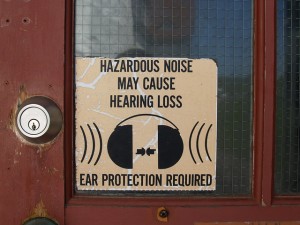
A new decision from the Supreme Court of Louisiana clarified that hearing loss caused by occupational exposure to hazardous noise levels falls under the Louisiana Workers’ Compensation Act and not tort law. The instant case presents a res nova issue in this court of whether gradual noise induced hearing loss caused by occupational exposure to hazardous noise levels is a personal injury by accident or an occupational disease, or both, under the Louisiana Workers’ Compensation Act (hereinafter, “LWCA”), thereby entitling the defendant employer to immunity from suits in tort under the exclusivity provisions of the LWCA. Interpreting the Act and mindful of the clear legislative purpose behind the workers’ compensation scheme–a principle that has been well-experienced in our jurisprudence, we find occupational noise-induced hearing loss (hereinafter, “NIHL”) falls squarely within the parameters of the LWCA, either the pre-1990 definition of “accident” or the post-1975 definition of “occupational disease.” The courtRead more
How Long Will a Contractor’s PTSD Last?

Contractors experiencing PTSD likely have problems with anger, anxiety, depression, forgetfulness, frustration, sleeplessness, stress, and withdrawal. They are likely asking themselves how long these symptoms are going to last. To answer this question and consider the legal effect of long lasting disability, contractors must consider the Diagnostic and Statistical Manual of Mental Disorders and the Defense Base Act. The Diagnostic and Statistical Manual of Mental Disorders: The “go-to” manual for the diagnosis of mental disorders is the American Psychiatric Association’s DSM-5. Essentially, think of the DSM-5 as a one-stop shop for the basic criteria necessary for a PTSD diagnosis. But the DSM-5 contains more than a basic list of diagnostic criteria. It also contains a section entitled, “Development and Course,” which discusses the length of time that it may take for PTSD to develop, as well as the length of time that PTSD may last. As for the time itRead more
New Article At Lexis Re: Medical Evidence in Longshore Claims

I follow LexisNexis’s Workers’ Compensation Law Community and check in often. A couple of weeks ago, Lexis posted an article from Yelena Zaslavskaya, the senior attorney for the Office of Administrative Law Judges. The article, entitled “Evaluation and Weighing of Medical Opinion Evidence in Longshore Cases,” discusses the medical evidence that is often presented in Longshore and Defense Base Act claims. Further, the article discusses how judges evaluate the medical evidence, especially where there are conflicting reports. I don’t want to steal any thunder from the LexisNexis article. As such, I encourage you to click on the hyperlinks above and check out the article for yourself. Photo courtesy of Flickr user Chris Potter.
Local National Translators and Defense Base Act Benefits
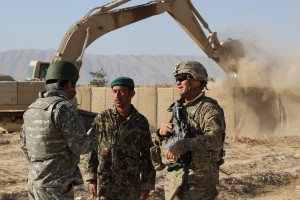
What if helping your home country also meant leaving your home country…at gun point…or to escape a price on your head? Some of our military contractors are faced with that very question. Specifically, I am talking about local nationals who help the United States or its allies in the war on terror. One of the most important jobs in the military involves translation and interpretation, a job that often requires the use of private contractors. Some interpreters are embedded with military units, going outside-the-wire with their team for extended periods of time. Others work from a forward operating base, translating intercepted broadcasts from insurgents. To be sure, there are translators and linguists from the United States that work in Afghanistan and Iraq. But local nationals are also hired to fill these roles. The Most Dangerous Job for Local National Contractors? It is hard to determine which job is the mostRead more
Just For Fun: Strongpoint Law Firm Playing Cards
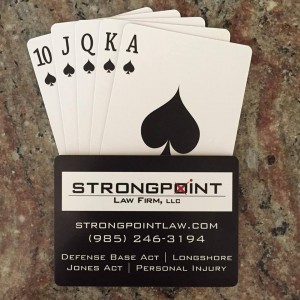
What client gift is best suited for Strongpoint Law Firm? A pen? A paperweight? How about playing cards? I just received Strongpoint Law Firm’s first batch of playing cards. And as you can likely tell, I am flush with joy over the finished product. (I’ll stop with the bad puns now.) In all seriousness, I am lucky to have great clients–folks that become family over the course of their claim. If the new playing cards make my clients happy, then the cards make me happy, too. As you can tell from the picture, Strongpoint Law Firm represents injured workers and their families in claims arising under the Defense Base Act, the Longshore and Harbor Workers’ Compensation Act, the Jones Act, and in personal injury matters. If Strongpoint Law can help you, contact me (Jon Robinson) immediately. I can be reached by phone at (985) 246-3194, by e-mail at [email protected], orRead more
Service Animal Coverage for Longshore and DBA Claims

Are service animals covered by the Longshore Act and the Defense Base Act as “medical benefits”? If so, what types of service animals are covered? Medical Benefits: To begin to answer the service animal questions, let’s look at Section 7 of the Longshore Act. Section 7 defines an employer’s obligation to pay medical benefits. Pursuant to that statute, the “employer shall furnish such medical, surgical, and other attendance or treatment, nurse and hospital service, medicine, crutches, and apparatus, for such period as the nature of the injury or the process of recovery may require.” See 33 U.S.C. § 907 (emphasis added). For the cost of the medical treatment to be assessed against the employer or its insurance carrier, the medical expense corresponding to the work-related injury must be both reasonable and necessary. That is the general framework for medical treatment. Employers shall provide treatment, but only treatment that is medicallyRead more
Control the War Hazards Narrative

Before I started representing injured workers, I represented employers and insurance carriers. I handled a lot of claims arising under the Longshore Act, including Defense Base Act (DBA) claims. I also filed a lot of Applications for Reimbursement under the War Hazards Compensation Act (War Hazards). In DBA claims where I knew that I would eventually file for War Hazards reimbursement, I always gave the same piece of advice to the carrier: no matter what, control the War Hazards narrative. Controlling the narrative is all about positioning. Carriers should pay the injured worker, fulfilling their obligation under the DBA. And while they are doing so, carriers should collect the necessary information to submit a successful War Hazards Application for Reimbursement. A Disputed Last Responsible Carrier Claim: One of the last cases I tried for the defense involved a last responsible employer/carrier dispute. Under the Longshore Act and the DBA, “aRead more
Panic Disorder and the Defense Base Act

A few weeks ago, I posted the first in a series of articles describing particular psychiatric disorders that are common to Defense Base Act claims. This series of posts provides the diagnostic criteria and features for each disorder. Today, I discuss “Panic Disorder.” The American Psychiatric Association’s Diagnostic and Statistical Manual of Mental Disorders, Fifth Edition (also called the DSM-5) assigns the following diagnostic criteria to Panic Disorder: A. Recurrent unexpected panic attacks. A panic attack is an abrupt surge of intense fear or intense discomfort that reaches a peak within minutes, and during which time four (or more) of the following symptoms occur: 1. Palpitations, pounding heart, or accelerated heart rate. 2. Sweating. 3. Trembling or shaking. 4. Sensations of shortness of breath or smothering. 5. Feelings of choking. 6. Chest pain or discomfort. 7. Nausea or abdominal distress. 8. Feeling dizzy, unsteady, light-headed, or faint. 9. Chills orRead more
Using Newspaper Articles In Your Defense Base Act Claim
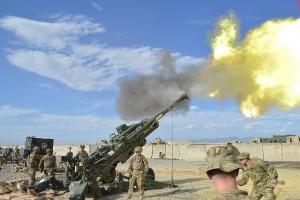
Newspaper articles may be one of the most overlooked sources of evidence in Defense Base Act claims. Articles that establish the time, date, and location of a terrorist or insurgent attack may be the best proof of the existence of the attack. As such, why not use the newspaper article to help establish a DBA claim? Establishing a Prima Facie Case: At the start of a Defense Base Act claim, an injured worker must prove a prima facie case. This means that, before anything else, the injured worker must prove (1) that they suffered an injury or harm, and (2) that an accident occurred or working conditions existed at work which could have caused the injury. If the claimant successfully proves a prima facie case, then they are entitled to a presumption that their injury comes under the purview of the Act. See 33 U.S.C. § 920 (1984). This is very importantRead more
Life Expectancy, Commutation, and the Defense Base Act

The value of a Defense Base Act death benefits claim depends on the life expectancy of the claimant. The shorter the life expectancy, the cheaper the claim. So what happens when a claimant’s life expectancy is cut short because of an unannounced change in government policy? Foreign nationals are about to find out because the Division of Longshore and Harbor Workers’ Compensation (DLHWC) just announced a new policy that reduces the presumed life expectancy for some claimants by 20 years or more. The new life expectancy change will affect commutation claims by foreign national beneficiaries–mostly death claims from spouses, elderly parents, and children. Here, I discuss commutation, the new life expectancy tables used by DLHWC, and the real-world effect of the life expectancy change on the value of a Defense Base Act claim. I also propose a solution: a rebuttable presumption whereby the Defense Base Act claimant can establish thatRead more
- « Previous Page
- 1
- …
- 14
- 15
- 16
- 17
- 18
- …
- 39
- Next Page »