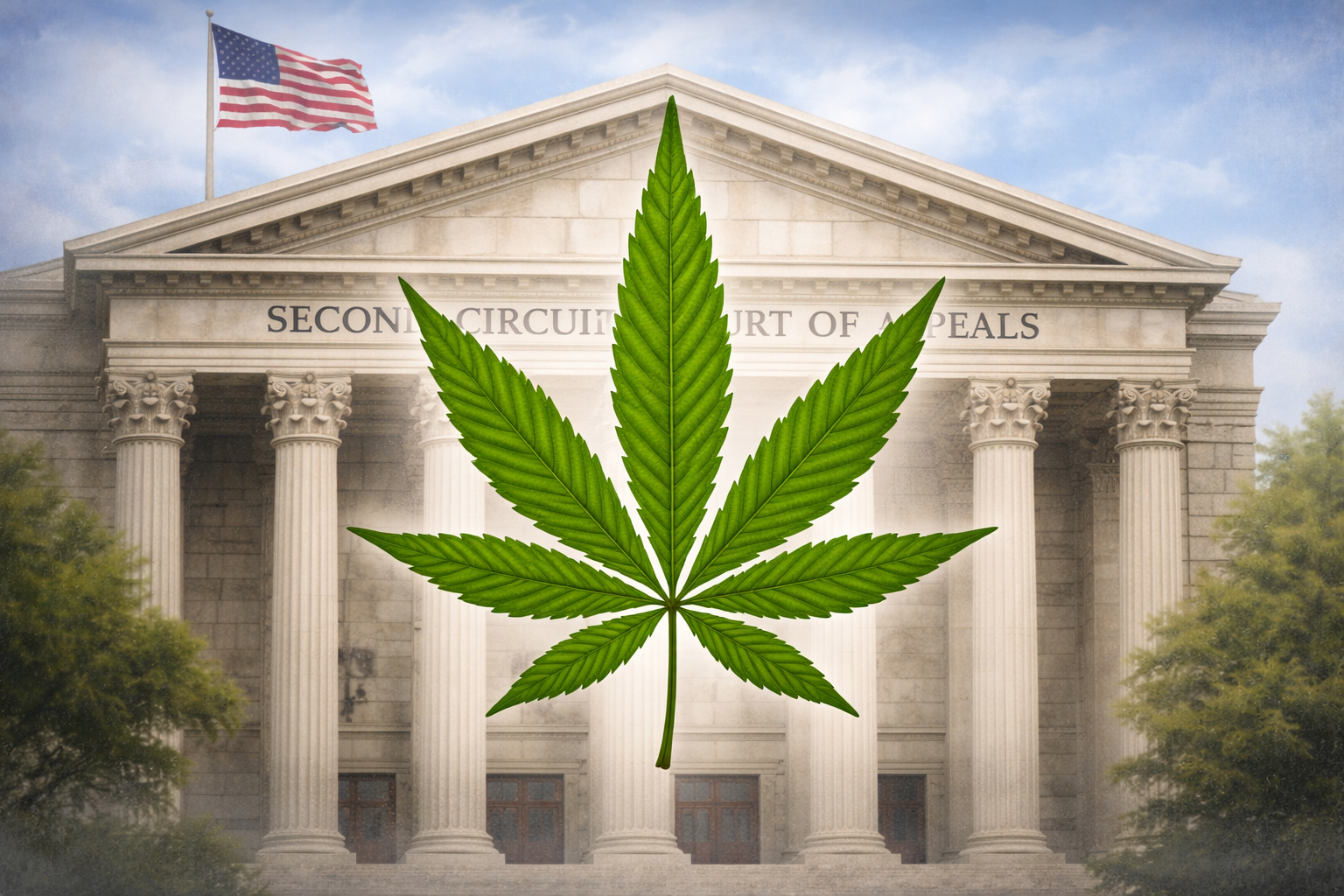
On March 5, 2026, the U.S. Court of Appeals for the Second Circuit denied Luis Peña Garcia’s petition for review and held that an employer and carrier cannot be required to reimburse a claimant for doctor-recommended cannabis-infused edibles as “reasonable and necessary” medical treatment under Section 7 of the Longshore and Harbor Workers’ Compensation Act (LHWCA), as extended by the Defense Base Act (DBA).
What Happened:
Peña, a Puerto Rico resident, suffered severe work injuries in 1994 that left him permanently disabled. Years later, a Puerto Rico-licensed physician recommended medical cannabis edibles (including “cookies infused with a specific dosage of medical cannabis”) to treat Peña’s chronic pain. That recommendation was consistent with Puerto Rico’s medical marijuana framework. Peña sought reimbursement from the employer’s insurance carrier. The carrier denied the request, and the case was referred to the Office of Administrative Law Judge. An Administrative Law Judge denied relief, and—by a 2–1 vote—the Department of Labor’s Benefits Review Board affirmed. The Second Circuit agreed and denied Peña’s petition.
The Court’s Reasoning in Plain English:
Section 7 of the LHWCA requires covered employers to furnish and reimburse “reasonable and necessary” medical care for covered injuries. But the court treated the Controlled Substances Act (CSA) as a hard stop. Congress classifies marijuana as a Schedule I substance, and Schedule I drugs are defined—by statute—as having “no currently accepted medical use” under federal law. On that logic, marijuana cannot qualify as a reimbursable medical treatment in a federal workers’ compensation program governed by federal law.
Peña argued that recent events suggested coverage is owed. For example, congressional appropriations “riders” limiting DOJ enforcement against state medical marijuana programs, plus recent federal actions signaling a softer approach to marijuana, should change the analysis. The court rejected those arguments for three main reasons:
- Appropriations riders don’t change the CSA. They constrain how DOJ spends money. The riders do not amend federal drug scheduling or create reimbursement rights under federal compensation statutes.
- Policy signals aren’t rescheduling. Pardons, research-expansion legislation, and executive-branch reviews or directives do not, by themselves, move marijuana out of Schedule I.
- State trends can’t override federal law. Even if states increasingly reimburse medical marijuana in state workers’ compensation systems, federal law controls federal programs.
No Reimbursement for Medical Marijuana Until Congress Acts:
Unless and until marijuana is removed from Schedule I by Congress or through completed federal rulemaking, adjudicators’ hands are tied. Federal adjudicators will treat cannabis products as categorically non-reimbursable under Section 7 of the LHWCA/DBA. It does not matter that a licensed physician recommends them and a state or territory authorizes medical use. To quote the Second Circuit:
It may very well be the case that the federal government will at some point—perhaps even in the near future—remove marijuana from Schedule I of the CSA. But that is a decision for the political branches of the federal government, not for the judiciary. This Court is obliged to apply the law as it currently stands.
So, contact your Congressional representatives and request a change in the law.