
Before I started representing injured workers, I represented employers and insurance carriers. I handled a lot of claims arising under the Longshore Act, including Defense Base Act (DBA) claims. I also filed a lot of Applications for Reimbursement under the War Hazards Compensation Act (War Hazards). In DBA claims where I knew that I would eventually file for War Hazards reimbursement, I always gave the same piece of advice to the carrier: no matter what, control the War Hazards narrative. Controlling the narrative is all about positioning. Carriers should pay the injured worker, fulfilling their obligation under the DBA. And while they are doing so, carriers should collect the necessary information to submit a successful War Hazards Application for Reimbursement. A Disputed Last Responsible Carrier Claim: One of the last cases I tried for the defense involved a last responsible employer/carrier dispute. Under the Longshore Act and the DBA, “aRead more
Panic Disorder and the Defense Base Act

A few weeks ago, I posted the first in a series of articles describing particular psychiatric disorders that are common to Defense Base Act claims. This series of posts provides the diagnostic criteria and features for each disorder. Today, I discuss “Panic Disorder.” The American Psychiatric Association’s Diagnostic and Statistical Manual of Mental Disorders, Fifth Edition (also called the DSM-5) assigns the following diagnostic criteria to Panic Disorder: A. Recurrent unexpected panic attacks. A panic attack is an abrupt surge of intense fear or intense discomfort that reaches a peak within minutes, and during which time four (or more) of the following symptoms occur: 1. Palpitations, pounding heart, or accelerated heart rate. 2. Sweating. 3. Trembling or shaking. 4. Sensations of shortness of breath or smothering. 5. Feelings of choking. 6. Chest pain or discomfort. 7. Nausea or abdominal distress. 8. Feeling dizzy, unsteady, light-headed, or faint. 9. Chills orRead more
Using Newspaper Articles In Your Defense Base Act Claim
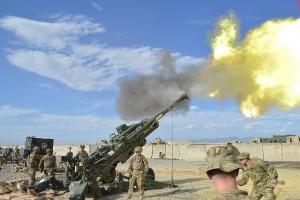
Newspaper articles may be one of the most overlooked sources of evidence in Defense Base Act claims. Articles that establish the time, date, and location of a terrorist or insurgent attack may be the best proof of the existence of the attack. As such, why not use the newspaper article to help establish a DBA claim? Establishing a Prima Facie Case: At the start of a Defense Base Act claim, an injured worker must prove a prima facie case. This means that, before anything else, the injured worker must prove (1) that they suffered an injury or harm, and (2) that an accident occurred or working conditions existed at work which could have caused the injury. If the claimant successfully proves a prima facie case, then they are entitled to a presumption that their injury comes under the purview of the Act. See 33 U.S.C. § 920 (1984). This is very importantRead more
Life Expectancy, Commutation, and the Defense Base Act

The value of a Defense Base Act death benefits claim depends on the life expectancy of the claimant. The shorter the life expectancy, the cheaper the claim. So what happens when a claimant’s life expectancy is cut short because of an unannounced change in government policy? Foreign nationals are about to find out because the Division of Longshore and Harbor Workers’ Compensation (DLHWC) just announced a new policy that reduces the presumed life expectancy for some claimants by 20 years or more. The new life expectancy change will affect commutation claims by foreign national beneficiaries–mostly death claims from spouses, elderly parents, and children. Here, I discuss commutation, the new life expectancy tables used by DLHWC, and the real-world effect of the life expectancy change on the value of a Defense Base Act claim. I also propose a solution: a rebuttable presumption whereby the Defense Base Act claimant can establish thatRead more
Defense of Freedom Medals and the War Hazards Comp Act

Too few Defense of Freedom Medals are awarded to deserving contractors. Far too few. When a civilian or military contractor is killed or wounded by hostile action experienced in the line of duty, then the contractor may be awarded the Secretary of Defense Medal for the Defense of Freedom–commonly known as the Defense of Freedom Medal or DFM. Initially, the medal was created for certain victims of the September 11th attack. Since that time, the scope of the medal has been extended to additional employees, including defense contractors. The problem, in my opinion, is that the medal is not awarded frequently enough. I base my opinion on the number of War Hazards Compensation Act claims opened and processed by the Department of Labor over the last decade in comparison to the few Defense of Freedom medals awarded during the same period of time. What are the Medal’s Requirements? Department ofRead more
Acute Stress Disorder and the Defense Base Act

PTSD is not the only psychological disorder affecting civilian contractors employed overseas. Other psychological disorders are equally dangerous, and they are also covered by the Defense Base Act. Over the next couple of months, I am going to periodically provide the diagnostic criteria for other mental disorders that are common to DBA claims. These criteria come directly from the American Psychiatric Association’s Diagnostic and Statistical Manual of Mental Disorders (also known as the DSM-5). And all of the disorders that I will mention are disorders I have actually encountered in Defense Base Act and War Hazards Compensation Act claims. Today’s post is about Acute Stress Disorder, the diagnostic criteria of which is: A. Exposure to actual or threatened death, serious injury, or sexual violation in one (or more) of the following ways: 1. Directly experiencing the traumatic event(s) 2. Witnessing, in person, the event(s) as it occurred to others. 3. LearningRead more
Grocery Shopping and the DBA’s Zone of Special Danger

Does the Defense Base Act’s zone of special danger doctrine extend to grocery shopping? That is a question the First Circuit will have to answer in Battelle Memorial Institute v. DiCecca, where a civilian contractor was killed while traveling in an employer-provided taxi to a grocery store in Tbilisi, Georgia. Grocery Shopping Falls Within the Zone of Special Danger? The First Circuit appeal stems from a Benefits Review Board Decision and Order in DiCecca v. Battelle Memorial Institute. The DiCecca claim stems from the death of a civilian contractor working in Tbilisi, Georgia. The contractor worked five days per week, but remained on-call for emergencies. In addition to wages, the contractor received a monthly allowance for housing and utilities, as well as vouchers for an employer-approved taxi service. On May 16, 2012, the contractor was killed when traveling to a grocery store, when his taxi was struck head-on by another car.Read more
What is a Longshore or DBA Impairment Rating Worth?

The Defense Base Act and the Longshore and Harbor Workers’ Compensation Act requires employers and insurance companies to pay benefits to injured employees. Initially, the injured civilian contractor or longshore worker receives temporary total disability benefits. As time passes, the employee may receive different disability classifications. Today’s post addresses the end a DBA or Longshore Act claim, when the employee receives permanent partial disability benefits. In short, I will show you how to calculate the dollar value of an impairment rating. What are Permanent Partial Disability Benefits? There are four types of disability benefits: temporary total, temporary partial, permanent total, and permanent partial. When an employee has reached permanent partial disability, this means: Their overall medical condition has reached a state of medical permanency. This is often referred to a maximum medical improvement, or MMI. They can return to their pre-employment work or the employer has demonstrated the availability ofRead more
How are DBA and Longshore Death Benefits Calculated?

When a civilian contractor or longshore worker dies as a result of their employment, their beneficiaries may be entitled to death benefits. In this post, I examine the methods used to calculate the value of Defense Base Act and Longshore death benefits. I address the importance of the average weekly wage; who may qualify as a beneficiary; compensation rates and cost of living adjustments; and I provide some example death benefits calculations based on hypothetical facts. Keep reading…despite the math. You will see how a death benefits Defense Base Act or Longshore claim could be valued over $1,750,000. Make no mistake: death benefits claims are high dollar, high stakes claims. What Was the Decedent’s Average Weekly Wage? First, start with the decedent’s average weekly wage. Section 10 of the Longshore and Harbor Workers’ Compensation Act provides the statutory requirements for determining a contractor or longshore worker’s average weekly wage. Essentially,Read more
The Defense Base Act, Traumatic Brain Injuries, and PTSD

Traumatic Brain Injury is the signature injury of the Iraq and Afghanistan wars. Concerns for veterans afflicted with TBI recently gained attention in a National Geographic cover story entitled, “Blast Force: The Invisible War on the Brain.” My post expands that excellent National Geographic article to defense contractors imbedded with the military in Iraq and Afghanistan. Private contractors experience many of the same hazards that war zone soldiers experience. By extension, the same concerns about TBI for soldiers should be extended to contractors, too. Blast Force: The Invisible War on the Brain: Caroline Alexander’s article is an illuminating portrayal of the medical problems affecting veterans with traumatic brain injuries. Some medical professionals theorize that the physical effect of an explosive detonation, even the controlled detonation of explosives, lead to TBIs. Ms. Alexander’s explanation of the stages of an explosion supports the professionals’ theories: BOOM: In the field a single blastRead more
- « Previous Page
- 1
- …
- 10
- 11
- 12
- 13
- 14
- …
- 23
- Next Page »