
Beginning on October 1, 2015, the following wage/compensation rates will apply in claims arising under the Longshore and Harbor Workers’ Compensation Act and its extensions. National Average Weekly Wage: $703.00 Maximum Compensation Rate: $1,406.00 Minimum Compensation Rate: $351.50 Percent Increase (from last year): 2.10% Visit the Division of Longshore and Harbor Workers’ Compensation’s NAWW Information Page for more information or to see past NAWW figures. Also, please keep in mind that the change in the National Average Weekly Wage applies to Defense Base Act claims too. Contact your attorney if you have any questions about the application of this change to your claim. Finally, if you need legal assistance with your Longshore or Defense Base Act claim, please contact Jon Robinson of Strongpoint Law Firm at (844) DBA-COMP or [email protected]. Attribution: Photo courtesy of Flickr User Ervins Strauhmanls.
The Last Responsible Covered Employer Rule

When an injured employee worked for multiple employers, questions about liability can arise. If the employee’s multiple employers were all maritime or Defense Base Act employers, then the last responsible employer rule is applied. But, what happens when the employee worked for employers covered by the Longshore Act or DBA as well as non-covered employers? Last Responsible Employer or Last Responsible Covered Employer? In a Longshore and Harbor Workers’ Compensation Act claim, the last responsible employer rule assigns liability to the employer who last exposed the injured worker to injurious stimuli. The last employer in time is the first employer in liability. If the last employer can exculpate itself from liability, then the second most recent employer will be liable unless it can exculpate itself too. And so on. Most of the time, courts address the last responsible employer rule vis a vis multiple maritime employers. That is, a longshore workerRead more
No Defense Base Act Comp? Then No Report of Earnings.

Recently, I received a request that one of my clients complete the Report of Earnings, Form LS-200. This is a form developed by the Department of Labor’s Division of Longshore and Harbor Workers’ Compensation. The form itself is completely legit. But, in my case there was a problem. The employer and carrier were not paying compensation to my client. Consequently, the issue was whether my client may refuse to complete the requested form because the employer and carrier were not paying Defense Base Act benefits. Statutory Basis for the Report of Earnings: The Defense Base Act is an extension of the Longshore and Harbor Workers’ Compensation Act (“LHWCA”). Section 8(j) of the LHWCA contains the provision for reporting earnings. See 33 U.S.C. § 908(j). It states: (j)(1) The employer may inform a disabled employee of his obligation to report to the employer not less than semiannually any earnings from employment or self-employment,Read more
How Do Longshore or Defense Base Act Trials Work?
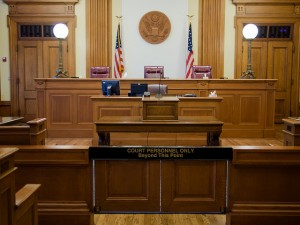
The administrative hearing process is foreign to most Longshore or Defense Base Act claimants. They have never been to an administrative hearing. They do not know how long it will take to get a hearing or a decision. They do not know what actually happens at the hearing. The good news is that there are online resources that can demystify the process. To get started, let’s have a quick rundown of the process that takes a case from the Division of Longshore and Harbor Workers’ Compensation (DLHWC) to the Office of Administrative Law Judges (OALJ). All Longshore and Defense Base Act cases start at the DLHWC. As the case develops, a dispute may arise. The dispute could be anything from a denied medical benefit to a complete and total claim denial. If the parties cannot resolve the dispute at the administrative level, then a party may request referral to the OALJRead more
Working Conditions Can Cause Compensable Injuries

An employee’s injury does not have to be caused by a specific traumatic event. Working conditions alone can be sufficient to cause a harm and a compensable disability. Some people do not understand the “injurious working conditions” concept. So, let’s start at the beginning: the prima facie case. When a claimant initiates a Longshore or Defense Base Act claim, they must prove two things: They suffered some harm or pain; and Working conditions existed or an accident occurred which could have caused the harm or pain. If the claimant successfully proves these two things, then they are entitled to the Section 20(a) presumption. See 33 U.S.C. 920(a) (1984). Affirmative medical evidence is not absolutely necessary, but it is helpful. The Section 20(a) presumption is a powerful tool. After the prima facie case is proven, the Longshore and Defense Base Acts presume that the worker’s injury falls under the purview of the applicable Act. Further, the presumptionRead more
Publications For the Longshore and DBA Community

It is time to take a look at what is happening around the Longshore and Defense Base Act world: The LexisNexis Workers’ Compensation Law Community has published quite a few articles about Longshore and DBA matters. Check out: Employee’s Death in Tax Accident While He Shopped for Groceries Found Compensable Under Defense Base Act by Thomas Robinson. D.C. Circuit Court Dismisses RICO Action for Alleged Tortious Conduct Related to Defense Base Act Claims, also by Thomas Robinson. 2015 Update from the Benefits Review Board by Karen Koenig, Associate General Counsel, Longshore Division, U.S. Department of Labor. In addition to discussing the new Benefits Review Board judicial appointees, the article touches on Section 49 discrimination. The Office of Administrative Law Judges’s website has been a hubbub of activity over the last two months because of the new Rules. If you haven’t done so yet, take the time to read: Final Rule, Rules ofRead more
Coverage and Problems for Secondary Psychological Injuries

Prior posts at the Longshore & DBA Review have addressed common psychiatric diagnoses that are litigated in Defense Base Act claims. Today I am going to talk about “secondary” psychological injuries that are also covered under the Longshore and Defense Base Acts. A “secondary” injury is one that arises naturally or unavoidably from an initial “primary” injury. Typically, “secondary” injuries arise in altered gait cases. For example, an employee injures their ankle. While treating for the ankle injury, they walk with an altered gait. The altered gait could lead to problems with the other ankle, or the hips, back, or knees. So long as the “secondary” injury (to the other ankle, hips, back, or knees) is the natural or unavoidable consequence of the first ankle injury, then the “secondary” injury is covered too. The same is true about psychological injuries. “Secondary” injuries are not restricted to physical problems. As such, ifRead more
Injured Employees Are Entitled To Medical Mileage

Injured employees are entitled to reimbursement for the miles driven to and from work-related medical visits. The Division of Longshore and Harbor Workers’ Compensation’s website provides additional detail about medical mileage reimbursement: 60. Can I get reimbursed for the cost of transportation to medical appointments and, if so, how much? Reasonable transportation expenses necessary for treatment of the work injury, including mileage, parking, and tolls, are reimbursable costs. Mileage is reimbursed at the rate in effect at the time travel costs were incurred according to the mileage for privately owned vehicles set by the US General Services Administration (GSA). The past and current rates are listed on the GSA website. 61. What form do I use to request medical mileage reimbursement? There is no special form required to request mileage reimbursement under the LHWCA. Some insurance companies have their own form which they may ask you to use. To claimRead more
Longshore Death Benefits Available for Same-Sex Spouses
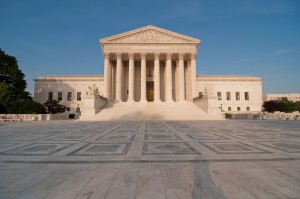
Last Friday, the Supreme Court issued its historic decision in Obergefell v. Hodges, wherein the Court held that the Fourteenth Amendment requires States to issue marriage licenses to same-sex couples and to recognize marriages between two people of the same sex performed out-of-State. This post addresses the effect that Obergefell will have on Longshore and Harbor Workers’ Compensation Act and Defense Base Act death benefits claims. Death Benefits Under the Acts: First, the statutes. Section 9 of the Longshore Act–which also applies to Defense Base Act claims–provides that death benefits shall be paid following a covered employee’s work-related death. See 33 U.S.C. 909. Benefits are paid to particular classes of beneficiaries. Among those beneficiaries are “widows” and “widowers.” Section 2 of the Longshore Act–again, applicable to Defense Base Act claims–defines the terms “widow or widower.” The terms include “only the decedent’s wife or husband living with or dependent for support upon himRead more
New Rules and Industry Notices in Longshore/DBA Claims

There is a lot going on in the Longshore and Defense Base Act community. Here is a run-down of new happenings at the Division of Longshore and Harbor Workers’ Compensation and the Office of Administrative Law Judges. Congratulations: First, congratulations are in order for Kristina Hall, the newest District Director at the Division of Longshore and Harbor Workers’ Compensation (DLHWC) office in Jacksonville, FL. Director Hall is very knowledgeable about the Longshore and Defense Base Acts. The DLHWC most definitely made a great choice. New Industry Notices: On June 12, 2015, the DLHWC issued Industry Notice No. 152. Essentially, the Industry Notice provides that parties can fill out a form that waives service of compensation orders in favor of electronic service. The idea is that payments will be made faster if the parties receive the order via e-mail instead of regular mail. The procedure for waiving service by mail canRead more
- « Previous Page
- 1
- …
- 3
- 4
- 5
- 6
- 7
- …
- 20
- Next Page »