
In Longshore and Defense Base Act cases, how do courts address post injury wage earning capacity when the injured worker owns a business? It all depends on the efforts expended by claimant in his business. To quote the Benefits Review Board: An employee’s earnings from self-employment may establish his wage-earning capacity. Sledge v. Sealand Terminal, 16 BRBS 178, 181 (1984); Mitchell v. Bath Iron Works Corp., 11 BRBS 770, 779 (1980). However, profit from ownership is not included in determining earning capacity. Seidel v. General Dynamics Corp., 22 BRBS 403 (1989). Thus, an administrative law judge should determine whether income from self-employment is the result of an ownership interest or claimant’s personal services; where a claimant’s business income is the direct result of the claimant’s “personal management or endeavor,” or the claimant performs such extensive services for the business that the income represents salary rather than profits, the income shouldRead more
Bagram Plane Crash Caused By Error, Not Terrorists

Last year, on October 2, 2015, a cargo plane crashed in Afghanistan, killing 14 people. The dead included five military contractors. Recently, the United States Air Force determined that the crash was caused by the misuse of a night-vision goggles case. Essentially, the pilot used a night-vision goggles case to brace the plane’s yoke in a manner that made loading easier. As stated in the USAF Aircraft Accident Investigation report: The [mishap pilot] placed a hard-shell [night-vision goggles] NVG case forward of the yoke during the [Engine Running Onload/Offload (ERO) operations]. This placement of the case braced the yoke in a position that raised the elevator to facilitate off-loading high-profile (tall) cargo. The blocking of the flight controls during loading operations is a non-standard procedure; as such, there is no regulatory guidance to prohibit the act, or to address the proper placement and removal of the object blocking the controls.Read more
Some Thoughts on Longshore and Defense Base Act Venue
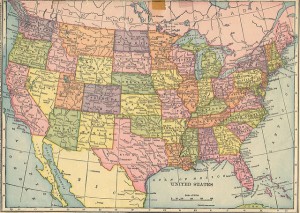
One of the easiest ways to contribute to a law blog is to look at your e-mail outbox. What issues have been discussed or litigated lately? In this post, I am going to share a few thoughts about venue–the location of an injured worker’s formal hearing. Keep two distances in mind: 75 miles and 100 miles. The relevant statutes and regulations use both distances, but for different reasons. First, formal hearings typically take place within 75 miles of the claimant’s residence unless there is good cause for having the formal hearing elsewhere. See 20 C.F.R. § 702.337. The 75-mile rule is not an absolute edict; it is a guideline. The 100-mile rule applies to witnesses who are not parties to the litigation. Basically, courts cannot require non-party witness to travel more than 100 miles. Section 24 of the Longshore and Harbor Workers’ Compensation Act provides a 100-mile jurisdictional limit forRead more
BRB Addresses Return to Work Offer and SAE

To establish a claim of total disability, a claimant must demonstrate an inability to return to his usual work as a result of his injury. This can be established by comparing the claimant’s medical restrictions to their job duties. If the claimant establishes total disability, then the burden shifts to the employer to show that the claimant can perform his usual job or, alternatively, the claimant can return to suitable alternative employment (or “SAE”). “Suitable” means appropriate for the claimant considering his age, education, vocational history, and physical capabilities. Recently, in an unpublished decision, the Benefits Review Board addressed a sticky situation. What happens when an employer offers the claimant their old job (i.e., their usual and customary employment), purportedly in reliance of a functional capacity evaluation that established the claimant’s work restrictions? The claimant in Burton v. ManTech International injured his right knee and left shoulder while working inRead more
Are Longshore or DBA Benefits Taxable?

It’s tax season. Time to talk about a question I am asked in every single case: are Longshore or Defense Base Act workers’ compensation benefits taxable? Take a look at IRS Publication 525, which discusses taxable and nontaxable income. On page 19, you will see a section titled, “Workers’ Compensation.” It says: Workers’ Compensation Amounts you receive as workers’ compensation for an occupational sickness or injury are fully exempt from tax if they are paid under a workers’ compensation act or a statute in the nature of a workers’ compensation act. The exemption also applies to your survivors. The exemption, however, does not apply to retirement benefits you receive based on your age, length of service, or prior contributions to the plan, even if you retired because of an occupational illness or injury. If part of your workers’ compensation reduces your social security or equivalent railroad retirement benefits received, thatRead more
Disclosing Defense Attorney’s Time Sheets in Fee Disputes

Attorney fees are heavily disputed in Defense Base Act and Longshore and Harbor Workers’ Compensation Act claims. In most cases, the injured worker’s fees shift from the worker to the employer and carrier. When fees shift, then the employer and carrier must pay the worker’s attorney. See 33 U.S.C. § 928. That’s where the arguments start. One common argument focuses on the time that a claimant’s attorney spent working on the case. Employers and carriers may argue that the attorney spent too much time on the file (i.e., that attorney spent an unreasonable amount of time litigating their claimant’s case). It should come as no surprise that the claimant attorneys take umbrage with these arguments. Some have suggested that defense attorneys should disclose the hours that they billed while defending a claim before attacking the hours that an injured worker’s attorney spent working on the claim. In fact, there wasRead more
Slipping in the Bathroom and the Zone of Special Danger

Slipping in the bathroom is covered under the zone of special danger. So says the Benefits Review Board in a new, published Defense Base Act decision, Ritzheimer v. Triple Canopy, Inc. Claimant worked as a force protection officer in Israel. Although he could not provide his exact work locations and duties, Claimant testified that he lived in an apartment in Be’er Sheva as a condition of his employment. The Employer selected, paid for, and furnished the apartment. Those furnishings, however, did not include a bath mat. Bathing and good personal hygiene were part of his job because his overseas employer, as well as the U.S. Government, required professionalism, including good grooming. On March 3, 2012, Claimant was injured while exiting his shower. He slipped on the wet bathroom floor and struck his right side on the edge of the tub. Claimant sustained significant injuries: four broken ribs and a puncturedRead more
Defense Base Act, Average Weekly Wage, and “Retirement”

The method for calculating an injured worker’s average weekly wage is often a hotly contested issue in Defense Base Act claims. Insurance carriers want to reduce the claimant’s average weekly wage (or “AWW”) because the smaller the AWW, the cheaper the claim. Of course, injured workers want to establish a higher AWW for the opposite reason. Recently, I’ve fielded a few questions about the AWW for injured workers with delayed onset occupational diseases, including pulmonary and psychological injuries. How should the parties calculate the injured worker’s AWW when the disease arose after the claimant returned to the United States? Should the parties calculate the AWW using overseas wages prior to the last date of employment, stateside wages, or the national average weekly wage? And, perhaps most importantly, can carriers use the Longshore and Harbor Workers’ Compensation Act’s retirement provisions to reduce a contractor’s AWW? I prepared this blog post withRead more
Loyola’s Annual Longshore Conference 2016

Every year, the Loyola University New Orleans College of Law presents the Annual Longshore Conference. This is the “go-to” conference for all Longshore and Defense Base Act industry professionals. This year’s conference should delight. All district directors are attending and speaking, as are all of the Office of Administrative Law Judges’ district chiefs. This is a rare gathering of all the Longshore and DBA elite. For more information about the conference, visit Loyola’s Continuing Legal Education webpage. For ease of reference, I’ve reprinted the schedule below: Thursday, March 10, 2016 7:30 a.m. – 8:15 a.m. Registration 8:15 a.m. – 8:30 a.m. Introduction and Announcements 8:30 a.m. – 9:30 a.m. Significant Judicial Decisions Impacting Claims Arising Under the Acts and its Extensions 9:30 a.m. – 10:15 a.m. A National Overview of the Office of Workers’ Compensation Programs 10:15 a.m. – 10:30 a.m. Break 10:30 a.m. – 12:00 p.m. Practice Before theRead more
Another Reason Not to Use Global Labor Market Surveys

To limit the value of a Defense Base Act claim, insurance carriers sometimes suggest that the injured worker can return to work anywhere in the world. By measuring their exposure against the existence of high-paying contract work, carriers argue that the particular DBA claim is only worth a fraction of its actual value. But shouldn’t insurance carriers have to consider the existence of non-deployable medical conditions or non-deployable medications before suggesting that an injured worker can return to work anywhere in the world on a government contract? My solution: exclude overseas contracting jobs from labor market surveys unless the insurance carrier can demonstrate that the injured worker can secure a medical waiver. Suitable Alternative Employment: First, let’s discuss suitable alternative employment. Once an injured worker proves a prima facie case of total disability, the carrier must demonstrate the existence of “suitable alternative employment.” Usually, this is proven with the helpRead more
- « Previous Page
- 1
- …
- 5
- 6
- 7
- 8
- 9
- …
- 23
- Next Page »