
The 2016 election season is in the books. As I watched the returns, I noticed that Senator Johnny Isakson was reelected in Georgia. This is important for the Longshore and Defense Base Act community because Senator Isakson has been one of the leading voices proposing amendments to the Longshore and Harbor Workers’ Compensation Act. Nearly any amendment made to the Longshore Act will necessarily affect the Defense Base Act. Take a look at Senate Bill S. 669, which Senator Isakson introduced to the Senate on March 29, 2011. Some of the changes are good. For example, funeral benefits presently pay out at $3,000. That amount has not been increased since 1984. An increase to $7,500 (if not more) is warranted. Other proposed amendments are game-changers. The four that should stick out to claimants include: Incorporating a proportional payment system whereby disability payments can be reduced by prior disability ratings orRead more
How Carriers Can Make Money By Losing Defense Base Act Claims

Today we’re going to run the numbers on a claim involving both DBA-only and DBA-WHCA injuries. By “DBA-only,” I mean that the claimant’s injury was not caused by a war event (like a rocket, mortar, or terrorist attack). And by “DBA-WHCA,” I mean that the claimant’s injury was caused by a war event. Knowing how to handle this type of case can result in massive savings for an insurance company and quicker benefits payment to an injured worker. The Defense Base Act Vs. The War Hazards Compensation Act: First, let’s discuss the Defense Base Act and its interplay with the War Hazards Compensation Act. The Defense Base Act is a system of federal workers’ compensation that applies to injured contractors working abroad. The DBA covers everything from slips-and-falls to the contraction of serious viruses to injuries caused by the actions of terrorists. The injured worker is compensated and receives medicalRead more
Retirement of a Longshore and Defense Base Act Legend

Richard V. Robilotti announced his retirement. Make no mistake, this is the retirement of a legend in the Longshore and Defense Base Act community. Mr. Robilotti is the district director for the Second Compensation District of the Division of Longshore and Harbor Workers’ Compensation (“DLHWC”) in New York. For forty years, Mr. Robilotti has been in charge of Longshore claims arising in New York, New Jersey, Puerto Rico and the Virgin Islands. Further, the New York office–for the longest time–was the go-to Defense Base Act office. Every claim that arose in Iraq and Afghanistan went to Mr. Robilotti’s desk, including claims made by local and third country nationals. My contact with Mr. Robilotti began when I first started practicing law. I graduated law school just as the Defense Base Act was heating up. At that time, the Second Compensation District was the only DLHWC office that I dealt with. Mr.Read more
2016-2017 National Average Weekly Wage Increase

The Office of Workers’ Compensation published the new National Average Weekly Wage for the 2016-2017 fiscal year. National Average Weekly Wage: $718.24 Maximum Compensation Rate: $1,436.48 Minimum Compensation Rate: $359.12 Percent Increase: 2.17% Click on this hyperlink to access the NAWW chart spanning from 1973 to 2017.
Proposed Rules on Max. and Min. Comp Rates in Longshore Claims

The Office of Workers’ Compensation Programs has published a new proposed rule pertaining to an injured worker’s compensation rate. The rule addresses the Longshore and Harbor Workers’ Compensation Act’s maximum and minimum compensation rate, and how to apply a particular rate to a particular injury. The proposed rule applies to the Longshore Act’s extensions, like the Defense Base Act. Letter from the DLHWC: The Director of the Division of Longshore and Harbor Workers’ Compensation, Antonio Rios, issued an explanatory letter on August 26, 2016. The letter stated, in pertinent part: The National Average Weekly Wage has historically risen from year to year, and this determination affects the maximum and minimum compensation rates under Section 6. Questions regarding which fiscal year’s maximum wage applied in various situations led to litigation. These questions have now largely been resolved through decisions of the courts of appeals and the Supreme Court. To provide clarityRead more
Status of the Zone of Special Danger Appeal in Jetnil

One of the most interesting zone of special danger cases from 2015 has been briefed for the Ninth Circuit Court of Appeals. The case, Jetnil v. Chugach Management Services, asks whether the zone of special danger doctrine should apply to local nationals who are injured in their home country. So far, the administrative law judge, Benefits Review Board, and Director have all said that the zone of special danger should apply. Employer and Carrier disagree, and they have taken the claim all the way to the Ninth Circuit. The Benefits Review Board’s Jetnil Decision: Like I mentioned in last year’s post about Jetnil, the employee was injured while he was fishing on the reef at Gagan Island (part of the Republic of the Marshall Islands). The employee, who was a citizen of the Republic, slipped and cut his foot on coral. The injury resulted in a below-the-knee amputation and subsequentlyRead more
Labor Market Surveys and Overseas “Non-War Zone” Jobs After Injury
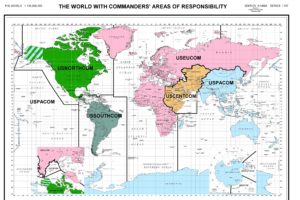
In nearly every Defense Base Act claim that involves an “unscheduled” injury, the parties will debate the level of work the claimant can perform after his injury. Sometimes, the employer and carrier will argue that the claimant can perform overseas contracting work…just not in a “war zone.” But, is “war-zone” work versus “non-war zone” work really the distinction that should be drawn? Proving Suitable Alternative Employment: If an injured employee establishes that they cannot return to the job that they held at the time of injury, then they are presumed to be totally disabled. To rebut the presumption, employers and insurance carriers often hire vocational experts to prepare a labor market survey. According to the vocational expert, the labor market survey will provide a list of jobs which the injured worker can allegedly perform. These jobs are commonly referred to as suitable alternative employment. Not every job is suitable forRead more
SIGAR: Afghanistan is Getting More Dangerous

Want to know how dangerous Afghanistan is? Just ask SIGAR. The Special Inspector General for Afghanistan Reconstruction releases quarterly reports to the United States Congress. These reports provide independent and objective audits of the state of affairs in Afghanistan. Obviously, security is an important topic. According to the SIGAR report published on April 30, 2016, Afghanistan is becoming even more dangerous. It remains “under increasing threat from the Taliban and other insurgents.” Below, I’ve quoted portions of the report that demonstrate the nightmare presently going on in Afghanistan: Security: The Eroding Bedrock It is telling that the feature story in the most recent SIGAR report is entitled, “Security: The Eroding Bedrock.” Here are some numbers to consider: According to the United Nations, Afghanistan experienced record-high civilian casualties from the ongoing hostilities in 2015; more than 3,500 killed–a quarter of them children–and nearly 7,500 wounded. As of late November 2015, U.S.Read more
Compensation “Forfeiture” Needs a District Director Determination

Today’s public service announcement concerns the unilateral suspension of an injured worker’s compensation benefits on the grounds of “forfeiture.” Injured workers are sometimes told by their insurance adjuster that the worker “forfeited” the right to compensation by failing to report earnings. Typically, this occurs after the adjuster sent the worker a form called the LS-200, Report of Earnings. Then, without seeking a district director’s determination, the adjuster suspends benefits. This is wrong. There is a procedure for the “forfeiture” of benefits. When the carrier has not followed the procedure, they have violated the law. The carrier is then subject to penalties and interest. Statutory Basis for Forfeiture: Forfeiture is a real thing. The statutory basis for forfeiture can be found in Section 8(j) of the Longshore and Harbor Workers’ Compensation Act. Section 8(j) states: (j)(1) The employer may inform a disabled employee of his obligation to report to the employerRead more
Defense Orthopedic Expert Questions

Claimants often ask me about the scope of an orthopedic defense medical examination. What is the doctor looking at? What is the doctor looking for? Is the doctor just a hired gun? Typically, the same questions are asked to every orthopedic defense expense. These questions define the scope of the examination. As such, it is good for a Longshore or Defense Base Act claimant to know what the insurance adjuster or defense lawyer asked the doctor. Without further ado, here is a list of typical defense medical examination questions and directions. Please identify all orthopedic symptoms of which Claimant currently complains. Please provide your diagnosis of Claimant’s current orthopedic condition(s), if any. Please address whether Claimant’s orthopedic diagnosis or diagnoses are related to a work incident. Please address whether Claimant’s orthopedic conditions were caused by an overcompensation injury. Please address any non-work-related cause(s) of Claimant’s current orthopedic conditions. Please adviseRead more
- « Previous Page
- 1
- …
- 4
- 5
- 6
- 7
- 8
- …
- 23
- Next Page »