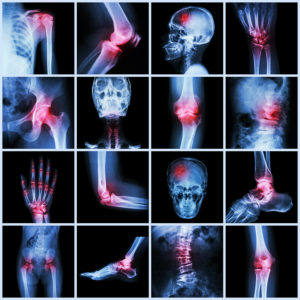
In prior posts, I addressed the psychological diagnoses and medications which may preclude redeployment to CENTCOM following a Defense Base Act injury. This post addresses the physical injuries which may preclude deployment or redeployment. In short, the military wants contractors who have the physical capability of performing their work and completing their mission. The Code of Federal Regulations says as much. See 32 C.F.R. 158.7(k). While it is true that medical waivers may be granted, those waivers are few and far between. In fact, waivers “are unlikely for contractor personnel.” Id. If a contractor wants an waiver for a particular employee, then “an explanation should be given as to why other persons who meet the medical standards could not be identified to fulfill the deployed duties.” Id. So, what are the physical conditions which may preclude deployment? Actually, the Department of Defense has prepared non-exhaustive lists that identify those conditions. The newest version ofRead more
Psychological Diagnoses That May Preclude Re-Deployment

This is the second part of an ongoing series devoted to exploring the minimal standards of medical fitness required for deployment or re-deployment to CENTCOM, as those standards apply to the Defense Base Act. Here, I address the psychological conditions which may preclude deployment. What is important for DBA claims is that these conditions also prevent re-deployment after an injured worker suffers a psychological injury as a result of his employment in a war theater. Knowing the minimal standards of medical fitness is a necessity. When an injured DBA contractor cannot return to their usual work, then they are presumed to be totally disabled. An insurance carrier can rebut the presumption by showing that the claimant can either return to their overseas work or engage in suitable alternative employment. Therein lies the reason why knowledge of the minimal standards is so important. If an injured worker cannot satisfy the minimal standardsRead more
Medications That May Preclude Re-Deployment After a DBA Work Injury

An employee must meet minimum standards of physical and psychological fitness to work with a defense contractor in CENTCOM. Typically, when an employee is hired, there is a pre-employment physical. During that physical, medical professionals will examine the claimant and take blood and urine samples. After the physical is passed, the employee may begin working for the defense contractor. Importantly, these standards of fitness also apply to a defense contractor’s employee who was injured on the job. At some time during the disabled employee’s treatment, a question will arise as to whether an employee can return to the same job the employee performed at the time of injury. To re-deploy to CENTCOM for work with a defense contractor, the employee must again satisfy the physical fitness requirements. Consequently, when assessing an ongoing disability, a potentially-determining issue is whether the defense contractor can pass a re-deployment physical. To pass a physical meansRead more
Section 10(i) and Average Weekly Wage in Psychological Disability Claims

It’s time to talk about the way insurance carriers are using Section 10(i) in psychological disability claims to reduce an injured worker’s average weekly wage (“AWW”). Essentially, carriers are misapplying Section 10(i), which is sometimes called Section 910(i), by taking it out of the context in which it was enacted. They are using the statute to artificially deflate–sometimes nullify–an injured worker’s AWW. The irony is that Section 10(i) was enacted to help a particular class of injured workers: retirees. Make no mistake, this is an important issue. Over the past year, I have seen an increasing number of Section 10(i) arguments. Before every mediation, before every formal hearing, the carriers I face off against throw Section 10(i) into the mix. Some do so knowing full well that their Section 10(i) argument is completely bogus. What is an Average Weekly Wage? An average weekly wage is pretty much exactly what itRead more
Average Weekly Wages in DBA Claims and the 1981 Miranda Decision

Once again it is time to trudge through the murky waters of average weekly wage calculations. That’s how the Defense Base Act industry feels to me right now. Some of the average weekly wage (or “AWW”) arguments I am seeing lately from carriers are heavy-handed and perhaps disingenuous. So, a series of AWW posts is in order. I am going to start with AWWs for employees who were injured in their first year of overseas employment. That is the focus of this post. Below, I discuss the overall competing interests in an AWW calculation, the original K.S. decision, the effect of vacating the K.S. decision (as opposed to the AWW equation used in K.S.), and why this discussion is needed now. Finally, I end this post by quoting in full the Benefits Review Board’s Miranda decision from 1981. The decision–which is alive and well–is precedent; but it is not available onRead more
Clark: An Important New Average Weekly Wage Decision from the BRB

The Benefits Review Board updated its website to include the decisions it reached in January 2016. One of the decisions, Clark v. Dyncorp International, struck me as particularly relevant to an average weekly wage argument that I am hearing in many DBA cases. The argument pertains to Section 10(i) of the Longshore and Harbor Workers’ Compensation Act. Some carriers are using Section 10(i) to try and slash an injured contractor’s average weekly wage. I am presently working on a longer post addressing this argument. Still, the Clark decision is so new that I thought it prudent to post about it ASAP. Interestingly, the BRB’s Clark decision does not cite Section 10(i). But the ALJ’s decision does. See Clark v. Dyncorp Int’l, 2014-LDA-00783 (OALJ Dec. 11, 2015). Reading through the BRB’s opinion, it becomes readily apparent that the opinion easily fits into the Section 10(i) puzzle. Frankly, I hope that theRead more
Slipping in the Shower Still Covered By the DBA’s Zone of Special Danger

Last year, I wrote a blog article about a Defense Base Act case from the Benefits Review Board involving a slip-and-fall in a shower. That case, Ritzheimer v. Triple Canopy, Inc., addressed the scope of the zone of special danger. Recently, the Middle District of Florida affirmed the Benefits Review Board decision. The zone of special danger does, in fact, apply to a slip-and-fall while exiting a shower. Factual Background and Procedural History: The facts of the case were laid out by the BRB. On March 3, 2012, the claimant exited his shower. He slipped on the wet bathroom floor and fell. The claimant’s injuries included four broken ribs and a punctured lung. Later, after returning to the United States and undergoing medical treatment, the claimant developed depression. Initially, the employer/carrier paid the claim. But then they stopped, arguing that the cause of the claimant’s injury was personal in natureRead more
Ethical Rules for Psychological Defense Base Act Assessments?

Recently, I was asked questions about the ethical obligations of psychologists who perform defense medical examinations. Are there ethical obligations? Yes, of course. There are ethical obligations for all licensed psychologists. For ease of reference, and to offer a quick example, here is the text for Texas Administrative Code’s “Evaluation, Assessment, Testing, and Reports” statute: (a) Scope and Purpose. (1) Licensees clearly describe the scope and purpose of evaluation, assessment, and testing to patients before they provide these psychological services. (2) Licensees produce reports that clearly state and accurately reflect the scope and purpose of evaluation, assessment, and testing. (b) Reliability and Validity. (1) Licensees verify, by signature and date, that every evaluation, assessment, test result, report, recommendation, or psychological diagnostic or evaluative statement produced is based on information and techniques sufficient to provide appropriate substantiation for its findings. (2) Licensees administer, score, interpret or use assessment techniques or testsRead more
The Statute of Limitations for DBA Psychological Injuries

It’s time for an important discussion about the statute of limitations for psychological injury claims. Quite simply, psychological injuries (including but not limited to PTSD) stemming from war zone work are classified as occupational diseases. They are given a two-year statute of limitations. Below, I present a survey of sorts. You will find the statutory language as well as language from multiple Office of Administrative Law Judges decisions which conclude that PTSD is an occupational disease. Section 13—The Statute of Limitations: The statute of limitations for Defense Base Act claims is the same as it is for Longshore claims. For nearly all injuries (with the exception being hearing loss), the statute of limitations is found at Section 13 of the Longshore Act. It states: (a) Time to file. Except as otherwise provided in this section, the right to compensation for disability or death under this Act shall be barred unlessRead more
Is there a “video game defense” in Defense Base Act claims?

In today’s post, I’m going to discuss video games. It probably seems a little odd to discuss games in connection with a Defense Base Act claim. In my opinion, it’s odd too. But, because I have recently fielded some inane arguments about the effect of video games on a claimant with a psychological injury, I thought it best to address the topic. And, believe it or not, this is not the first time I have heard this argument. Back when I used to be a defense attorney, the video game argument was batted around as a potential defense. Ultimately, the argument was dismissed—too laughable to pursue. The argument is fairly simple to grasp. An insurance carrier argues that its liability for benefits has been severed because video games are a stressor that aggravated the injured worker’s psychological injury or created a new psychological injury. Essentially, the carrier is using theRead more
- « Previous Page
- 1
- …
- 3
- 4
- 5
- 6
- 7
- …
- 23
- Next Page »