
The Defense Base Act (“DBA”) allows a claimant to shift liability for attorney’s fees to the employer and insurance carrier, if certain criteria are satisfied. In that context, sometimes fee disputes arise. In a fee dispute, the employer or insurance carrier argues that a claimant attorney’s hourly rate is excessive, or that certain time entries should not be paid. For the most part, this post does not address hourly rates. Instead, this post addresses the amount of time billed for particular tasks…and a proposed way for the Office of Administrative Law Judges (“OALJ”) or the Office of Workers’ Compensation Programs (“OWCP”) to avoid lengthy and often contentious fee litigation. Those agencies could adopt a fee procedure similar to Local Rule 54.3 from the Northern District of Illinois. How Local Rule 54.3 Helps: Sometimes, the attorneys hired by DBA carriers make hypocritical objections to time entries on a claimant attorney’s fee petition. ByRead more
Post-Negotiation Delays Prevent Timely DBA Settlement Completion

Agreeing to settle your Defense Base Act claim is not the end of the DBA process. Over the past couple of years, we have noticed new trends that delay the settlement process. With so many claimants questioning the delays, I thought it best to address this issue with an article. Negotiating a Settlement Does Not End the Claim: Defense Base Act claims do not end when the parties negotiate a settlement. Unfortunately, there is a long wait time after negotiations. And that wait time has grown exceedingly long over the past few years. Whereas the delay used to be weeks, now it is months–sometimes four to eight months. After the parties negotiate a settlement number, the insurance carrier’s attorneys prepare the settlement paperwork. A settlement application is approximately 10 to 15 pages long. It details the claimant’s medical history, the disputes between the parties, and why the parties believe the settlementRead more
Test or Deny? How Invalid Psych Testing Affects Foreign DBA Claims

The Defense Base Act has a “test or deny” problem. Insurance carriers argue that DBA benefits cannot be awarded for work-related psychological injuries or disabilities absent psychological testing. That is false. The American Psychological Association does not require psychological testing prior to diagnosis and treatment. The current Diagnostic and Statistical Manual for Mental Disorders (or “DSM-5”) does not require psychological testing as a part of its diagnostic criteria. And DBA caselaw makes it abundantly clear that an employee need not meet the criteria of a specific diagnosis to successfully state the existence of an injury. Yet, the “test or deny” problem persists–especially for psychological claims involving foreign nationals. The administration of psychological tests to foreign DBA claimants begs some questions: Is it appropriate for defense experts to administer psychological tests to foreign nationals in the absence of normative or validation data to which the examinee’s answers can be compared? IsRead more
30-Day Notice Period for Vocational Expert Examinations

Defense Base Act litigation often features a slew of experts, including vocational experts. The issue presented in this post is whether the 30-day notice period applicable to medical expert examinations also applies to vocational expert examination. I believe it does–both legally and logistically. What is a Vocational Examination? Briefly, a vocational examination involves a trained expert asking questions to an injured worker about their educational, employment, and medical background. Following the examination, the vocational expert must prepare a report and a labor market survey. The purpose of the survey is to identify “suitable alternative employment.” Different circuits have different requirements for what constitutes suitable alternative employment. Typically, suitable alternative employment must identify jobs available in the community that the worker is capable of performing given the worker’s age, background, and medical restrictions. The economic security offered by suitable alternative employment must be “long-term.” Newport News Shipbuilding and Dry Dock Co. v.Read more
New Administrative Notice for Foreign National DBA Claims

A new Administrative Notice provides guidance for Defense Base Act claims involving foreign nationals. The Administrative Notice, known as In Re: Cases Involving Foreign Parties, Witnesses, and/or Evidence or 2021-MIS-00006, addresses issues regarding foreign testimony and “documentary evidence obtained outside the territorial jurisdiction of the United States . . . .” The Administrative Notice states (with footnotes omitted): Case No.: 2021-MIS-00006 In Re: CASES INVOLVING FOREIGN PARTIES, WITNESSES, AND/OR EVIDENCE ADMINISTRATIVE NOTICE Proceedings before the Office of Administrative Law Judges (“OALJ”) involving foreign parties, foreign witnesses, and/or foreign evidence may present complex adjudicative issues, particularly when a party is located outside the territorial jurisdiction of the United States, or when a party seeks to present testimony of a person located outside the territorial jurisdiction of the UnitedStates and/or evidence obtained outside the territorial jurisdiction of the United States. I issue this Administrative Notice in order to minimize the risk that the partiesRead more
National AWW Percent Increase for Longshore and DBA, Fiscal Year 2022

Each fiscal year, the Secretary of Labor must calculate a new National Average Weekly Wage for Longshore and Defense Base Act claims. See 33 U.S.C. 906(b)(3). The Secretary made those calculations for fiscal year 2022. The Fiscal Year 2022 Numbers: For the period between October 1, 2021, and September 30, 2022, the following values apply: National Average Weekly Wage: $863.49 Maximum Compensation Rate: $1,726.98 Minimum Compensation Rate: $431.75 Percent Increase: 5.77% (but there’s a catch) Percent Increase: What does all this mean? First, I want to address the percent increase. This entire percent increase does not apply to death or permanent total disability benefits. Although cost of living adjustments apply annually to those classification of benefits, no percent increase may exceed 5%. Section 10(f) of the Longshore Act, which also applies to the Defense Base Act, states: (f) Effective October 1 of each year, the compensation or death benefits payable for permanent total disabilityRead more
Hurricane Ida Updates – September 6, 2021

Hurricane Ida devastated Louisiana. Three days later, power and internet remain down for the vast majority of southeastern Louisiana. Thank you to all of the clients and colleagues who have reached out over the past few days. Today, Chief Administrative Law Judge Stephen Henley issued an Administrative Order that postpones and tolls pending deadlines. Specifically, the order states: All proceedings before the Office of Administrative Law Judges (“OALJ”), including formal hearings, oral arguments, mediations, and pre-hearing conferences, scheduled to take place in or within 150 miles of New Orleans, Louisiana–or involving any party, attorney, or law firm located in or within 150 miles of New Orleans, Louisiana–are POSTPONED until further notice. All associated hearing-related deadlines, such as pre-hearing exchanges, discovery deadlines, post-hearing briefs and similar matters, are TOLLED until subsequent order. I am thankful for the order. I am relying on generator power and a hotspot to provide this update.Read more
CBD Oil as a Covered Medical Expense Under the Longshore Act and DBA

CBD oil can be a covered workers’ compensation expense under the Longshore and Defense Base Acts. As of now, medical marijuana is not. Section 7 of the Longshore and Harbor Workers’ Compensation Act requires employers to pay for reasonable and necessary medical treatment associated with an employee’s work-related injury. See 33 U.S.C. 907. That same law also applies to the Defense Base Act. See 42 U.S.C. 1651. Recently, Judge Carrie Bland juxtaposed the completely legal use of CBD oil with the lack of coverage typically afforded by federal administrative courts to medical marijuana. The following passage is from Rykaczewski v. Ceres Marine Terminals, OALJ No. 2018-LHC-00075 (OALJ Dec. 12, 2020) (internal record citations omitted): Ceres next posits that it cannot be held responsible for providing Rykaczewski with Cannabidiol (“CBD”) or marijuana. Rykaczewski testified that he uses CBD to help with his anxiety. Further, Ceres indicates that Rykaczewski submitted as an exhibit a prescription fromAndersonRead more
The Misapplication of the Marino-Sewell Doctrine in War Zone DBA Claims
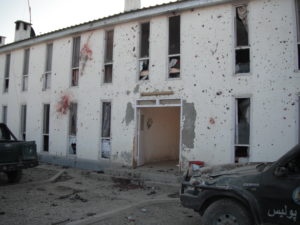
This posts addresses the frequently misapplied Marino-Sewell doctrine. This doctrine is often used as a basis for denying Defense Base Act workers compensation benefits to injured workers. The problem is that the Marino-Sewell doctrine does not support the denial of benefits when a legitimate adverse personnel decision co-exists with injurious working conditions or events. A Typical Real Life Example: In his Form LS-203, an Afghanistan-based employee alleged that he was exposed to war-risk hazards that led to the development of a psychological injury and disability. A “war-risk hazard” is a term that is often used to describe attacks, explosions, indirect fire, and more. In response to the injured worker’s claim, the carrier filed a Form LS-207. The carrier controverted—i.e., denied—the claim. The claim was controverted for the following reason: “Claimants inability to work is due to RIF in May 2019 from employment.” In this context, “RIF” means “reduction in force.” The carrier’s controversionRead more
Let’s Talk About Attack Logs in Defense Base Act Claims…
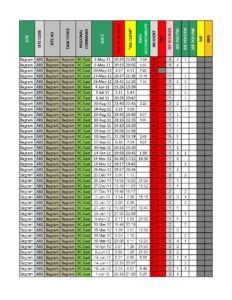
Let’s talk about the use of attack logs in Defense Base Act claims. These incredibly helpful logs, which many contracting companies maintain in the regular course and scope of business, are directly relevant to the existence of working conditions which could have caused or contributed to a DBA claimant’s injury. Yet, some insurance carriers often try to hide this discoverable information. Some have even claimed that they “have no records of attacks relating to Claimant or Employer’s property” even though they have attack logs (and more) in their possession. That’s a lie. So, I am going take the mystery out of attack logs. I am going to explain what they are, why they are relevant, what insurance carriers use them for, how the Office of Administrative Law Judges have responded to motions to compel, and how it prejudices a claimant when an insurance carrier hides relevant information. Finally, I willRead more
- « Previous Page
- 1
- 2
- 3
- 4
- …
- 39
- Next Page »