
Here are a few updates from the Office of Administrative Law Judges and the Division of Longshore and Harbor Workers’ Compensation. Most, but not all, are related to COVID-19. Office of Administrative Law Judges–Subpoenas: First and foremost, keep in mind that the OALJ is running on a skeleton crew. Therefore, some requests might be overly burdensome at the present time. Case in point: routine subpoenas. The OALJ has twice posted to its website about requesting subpoenas. The most recent post states: Because OALJ offices are minimally staffed at present, parties should refrain from requesting subpoenas at least until April 24, 2020 unless they can explain the compelling circumstances. Even with compelling circumstances, OALJ cannot guarantee timely processing. This applies both to cases currently pending before OALJ and to longshore (and longshore extension) cases pending before OWCP. My read on this paragraph is that litigants should simply refrain from requesting subpoenasRead more
Fifth Circuit Addresses Longshore Situs and Status in New Opinion

Last week, the Fifth Circuit issued an important Longshore Act opinion. The court addressed “situs” and “status,” two very important factors in all Longshore or LHWCA claims. The opinion is MMR Constructors, Inc. v. Director, OWCP. Factual and Procedural Background: Henry Flores worked for MMR Constructors as a technician for electrical systems. He injury occurred while assisting with “electrical wiring for the construction of Chevron’s tension-leg platform named Big Foot.” At the time of Mr. Flores’ accident, the platform which would ultimately become the Big Foot was floating on pontoons in Corpus Christi Bay. Steel cables and utility lines connected the platform to land. Initially, the Office of Administrative Law Judges denied benefits. The Benefits Review Board overturned that order. MMR Constructors ultimately appealed to the Fifth Circuit, which affirmed. Injury on Navigable Waters – Situs: First, the Fifth Circuit addressed the “situs” test. The “extent to which a craft orRead more
OALJ Suspended Hearings/Deadlines in DBA and Longshore Claims

The Office of Administrative Law Judges suspended hearings and procedural deadlines due to the COVID-19 national emergency. The suspension takes effect on March 23, 2020. This suspension applies to both Longshore and Defense Base Act claims. What does this mean? The OALJ suspended until May 15, 2020. The OALJ will reassess this suspension on May 4, 2020, to determine whether the suspension will continue beyond May 15th. The moratorium on hearings does not include cases that will be decided on the record. Procedural deadlines currently pending are suspended until May 15, 2020. The assigned judge will address deadlines for cases scheduled for hearing between May 18 and June 12, 2020. Telephonic mediations and settlement judge conferences may proceed with the consent of all parties. File documents via e-mail. OALJ offices will be minimally staffed so, again, file documents by e-mail. Decisions in DBA and Longshore Act and claims will not beRead more
Coronavirus, Global Labor Market Surveys, Hiring Freezes, and the DBA
The Department of Defense announced a general freeze on travel and hiring that applies to both uniformed and civilian personnel. The announcement, which was made on March 11, 2020, is the D0D’s response to coronavirus. This announcement will no doubt have an affect on Defense Base Act contractors. This post focuses on the affect that the DoD’s hiring freeze will have on the use of global labor market surveys in Defense Base Act claims. “Disability” Under the Defense Base Act: The Defense Base Act pays for disabilities. A “disability” is the “incapacity because of injury to earn the wages which the employee was receiving at the time of injury in the same or other employment.” 33 U.S.C. 902(10). Read that definition again. It is the inability to earn the same wages. For purposes of this post, there are two types of disability to consider: total and partial. Total disability meansRead more
Coronavirus Made Defense Base Act Commutations Much More Expensive

Defense Base Act claims for foreign nationals are often resolved by settlement. The settlement is calculated by reference to the claim’s “commutation value.” Coronavirus has caused market changes and prompted interest rate cuts. As of March 4, 2020, the one year constant maturity rate was 0.59%, down from 1.98% just nine months earlier. Because “commutation value” is dependent on the interest rate, the recent market change has a huge effect on the Defense Base Act industry. The lower the one year constant maturity interest rate, the more expensive the “commutation value.” As such, it might be necessary to reconsider outstanding settlement demands because the DBA claim’s value has likely changed. What is Commutation? In the Defense Base Act context, “commutation” is a remedy whereby insurance carriers can reduced their liability for indemnity benefits by one-half. The relevant statute, 42 U.S.C. 1652(b), states: Compensation for permanent total or permanent partial disability underRead more
Defense Base Act Death Benefits For Survivors of Murdered Contractors

The Defense Base Act provides death benefits to the survivors of contractors killed overseas. Recently, a rocket strike in Iraq killed Mr. Nawres Waleed Hamid, a contractor-linguist for Valiant Integrated Services. News outlets report that a widow and two minor children survived Mr. Hamid. More likely than not, Mr. Hamid’s widow and minor children are entitled to Defense Base Act death benefits. What Are Defense Base Act Death Benefits? The Defense Base Act is an extension of the Longshore and Harbor Workers’ Compensation Act. Therefore, the Longshore’s Act’s statute for the payment of death benefits controls. The relevant statute is 33 U.S.C. 909, often referred to as Section 9. When a decedent is survived by a widow and minor children, then those children are the preferred class of beneficiaries. In this situation, the pertinent language from Section 9 states: If the injury causes death, the compensation therefrom shall beRead more
What is the Defense Base Act? How Do You File a DBA Claim?

The Defense Base Act is the best kept secret in the contracting world. But, if a claimant is injured at work, they might hear about the Defense Base Act through their employer, co-workers, or Internet searches. This post discusses some basics about the DBA, and it ends with an invitation to contact Strongpoint Law Firm if you would like additional information. What is the Defense Base Act? The Defense Base Act is workers’ compensation. Injured workers may file claims for weekly compensation and medical benefits. Congress enacted the DBA during World War 2, using the Longshore and Harbor Workers’ Compensation Act as the framework. Longshore Act law applies unless the DBA says otherwise. But, there is also a unique doctrine that applies to DBA claims called the zone of special danger doctrine. Basically, the zone of special danger expands an insurance carrier’s liability to cover work injuries that happen overseas.Read more
The Defense Base Act and MOD FOURTEEN’s Minimal Fitness Standards
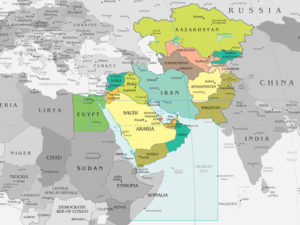
The U.S. Central Command recently released MOD FOURTEEN, which identifies the current minimal fitness standards required for deployment to the USCENTCOM Area of Responsibility (as of October 2019). Why is MOD FOURTEEN Important? MOD FOURTEEN, just like earlier MODs, is extremely important for Defense Base Act claims. Why? Because if a contractor cannot satisfy MOD FOURTEEN’s fitness standards, then the contractor is unemployable in any USCENTCOM country. Think about it in terms of releases to return to work. MOD FOURTEEN defines the absolute minimal physical and mental fitness requirements for a return to work after an overseas work injury. If the claimant does not meet the minimal standards, the claimant may not deploy absent a medical waiver. Total Versus Partial Disability and Labor Market Surveys: In a Defense Base Act claim, an injured claimant who cannot return to their pre-injury job is presumed to be totally disabled. Total disability means thatRead more
International-Matex: 5th Circuit Addresses Situs, Status, MMI, and SAE
Recently, the Fifth Circuit published an important Longshore and Harbor Workers’ Compensation Act decision: International-Matex Tank Terminals v. Director, OWCP. The issues included maritime situs, maritime status, the concept of maximum medical improvement, and the claimant’s efforts to locate suitable alternative employment. Maritime Situs: The Longshore Act applies to claimants injured “on a maritime situs.” That means an injury must have “occurr[ed] upon the navigable waters of the United States (including any adjoining pier, wharf, dry dock, terminal, building way, marine railway, or other adjoining area customarily used by an employer in loading, unloading, repairing dismantling, or building a vessel.” See 33 U.S.C. 903(a). “Situs” has both a geographical and a functional component. The geographical component asks whether the area of injury “adjoined” navigable waters. “Adjoining” means “border on” or “be contiguous with” navigable waters. The functional component asks whether the area of injury is either included expressly in the list of possible injuries in 33Read more
Medical Marijuana, the Defense Base Act, and the MORE Act of 2019

Workers’ compensation pays for medical benefits. In the Defense Base Act world, employers and insurance companies “shall furnish such medical, surgical, and other attendance or treatment, nurse and hospital service, medicine, crutches, and apparatus, for such period as the nature of the injury or the process of recovery may require.” See 33 U.S.C. 907(a). But there is a problem with marijuana. It has not yet been decriminalized at the federal level. While it is true that some states allow recreational marijuana use and many states allow the use of medical marijuana, the Defense Base Act is a federal workers’ compensation system. So, does the status of the DBA as a federal workers’ compensation system outweigh the medicinal quality of the substance at issue? On the one hand, some people argue that medical marijuana should be covered in Defense Base Act claims where the claimant resides in a state where medical marijuana is legal.Read more
- « Previous Page
- 1
- 2
- 3
- 4
- 5
- …
- 39
- Next Page »