
The Zone of Special Danger is an integral feature of the Defense Base Act, a system of federal workers’ compensation that provides benefits to certain defense contractors. What is often misunderstood, however, is the history of the Zone of Special Danger (or “ZOSD”). Considering the ZOSD’s age, there is still a lot of litigation about the doctrine’s applicability. Below, I provide some explanation about the origins of the ZOSD and how recent courts have honored the origins of the ZOSD in thoughtful opinions. The Zone of Special Danger is an Import from England: First, it is important to understand that the ZOSD is an import from English caselaw. In Thom v. Sinclair, a case published in 1917, the House of Lords analyzed whether an injury “arose out of” employment when a brick wall fell on the shed in which the employee was working. Lord Shaw wrote: There may be causes ofRead more
BRB Addresses Disability and the Deprivation of Economic Choice in a PTSD Claim

On September 27, 2018, the Benefits Review Board (“BRB”) issued a published Robinson decision in Robinson v. AC First, LLC. Robinson addressed the concept of disability for an injured worker with delayed-expression post traumatic stress disorder (“PTSD”). Robinson will likely become the benchmark for the determination of the existence of a disability following a voluntary resignation from overseas employment, the deprivation of economic choice, and for the consideration of wage earning capacity for workers with PTSD. Brief Factual and Procedural Background: In Robinson, Claimant worked overseas for four years, from 2009 to March 31, 2014, at which time Claimant resigned. He returned to the United States on April 15, 2014. Then, Claimant began working stateside for Union Pacific on May 5, 2014, where he continues to work. On August 26, 2015, sixteen months after Claimant returned home, he sought medical treatment for PTSD. Claimant filed a Defense Base Act claim with April 15, 2014Read more
DOL Published the National Average Weekly Wage Numbers for 2018
Every year, the Department of Labor’s Division of Longshore and Harbor Workers’ Compensation publishes an updated National Average Weekly Wage. This annual update is required by statute. See 33 U.S.C. 906(b)(3). The 2018 numbers are in. For the 2018 fiscal year, which spans from 10/01/2017 to 09/30/2018, the National Average Weekly Wage is $735.89. The maximum compensation rate that can be paid (depending on the injured worker’s average weekly wage) is $1,471.78. The minimum compensation rate is $367.94. The 2018 National Average Weekly Wage is 2.46% higher than the same number in 2017.
Ninth Circuit Issues Longshore Decision Protecting Injured and Disabled Retirees

The Ninth Circuit issued an important opinion abut the availability of Longshore disability benefits for a retiree. This published opinion, issued in Christie v. Georgia-Pacific Co., follows a Fourth Circuit opinion on January 3, 2018, which also addressed retiree benefits. From coast to coast, the federal appellate courts have issued decisions which protect retirees. Brief Summary of Christie: The Summary of the Christie decision succinctly explains the Ninth Circuit’s reasoning: The panel interpreted the language of 33 U.S.C. § 902(10) defining “disability,” and held that claimant’s decision to retire early did not prevent him from receiving permanent total disability benefits. The panel further held that substantial evidence in the record supported the administrative law judge’s findings that claimant was disabled with the meaning of the Act: he achieved maximum medical improvement, he could no longer return to his previous employment, and the employer failed to establish that suitable alternative employment existed. The panel noted thatRead more
Additional Thoughts on FECA Bulletin No. 18-03 and Psychological DBA Injuries

Last month, the Division of Federal Employees Compensation (“DFEC”) published FECA Bulletin No. 18-03. The bulletin addresses how the government agency will process an insurance carrier’s claims for reimbursement under the War Hazards Compensation Act (“WHCA”). Carriers apply for WHCA reimbursement after they pay a disabled contractor’s benefits pursuant to the Defense Base Act (“DBA”). FECA Bulletin No. 18-03 addresses psychological injuries, and the evidence that a carrier needs to submit to the government to receive reimbursement of the benefits it paid to the contractor. For some time now, insurance carriers have been concerned about the reception their evidence would receive at DFEC when applying for reimbursement. The concern was that the evidence they submitted would be too general or vague to warrant reimbursement. This concern trickled down into the underlying DBA claim, causing additional litigation for injured workers. With any luck, FECA Bulletin No. 18-03 will also trickle downRead more
New Executive Order Affects Hiring of Federal ALJs (including DOL ALJs)

On July 10, 2018, President Donald Trump signed an executive order that affects the criteria for hiring federal administrative law judges (“ALJs”). This is particularly important for Longshore and Defense Base Act claims because those claims are adjudicated by ALJs. The order, titled Executive Order Excepting Administrative Law Judges from the Competitive Service, states in full: By the authority vested in me as President by the Constitution and the laws of the United States of America, including sections 3301 and 3302 of title 5, United States Code, it is hereby ordered as follows: Section 1. Policy. The Federal Government benefits from a professional cadre of administrative law judges (ALJs) appointed under section 3105 of title 5, United States Code, who are impartial and committed to the rule of law. As illustrated by the Supreme Court’s recent decision in Lucia v. Securities and Exchange Commission, No. 17-130 (June 21, 2018), ALJs are often called upon to discharge significant duties and exercise significant discretion in conductingRead more
FECA Bulletin No. 18-03 Offers Guidance on Psychological War Hazards Claims

A new FECA Bulletin answered a pressing question in the Defense Base Act and War Hazards Compensation Act community: what evidence is needed to prove emotional distress reimbursement claims? FECA Bulletin No. 18-03, which the Division of Federal Employees’ Compensation (“DFEC”) issued on June 6, 2018, is as useful in Defense Base Act claims as it is in War Hazards claims. There’s no denying that insurance carrier’s litigate DBA claims with an eye towards War Hazards reimbursement. The Defense Base Act and the War Hazards Compensation Act: Insurance carriers pay benefits to claimants pursuant to the DBA. Then, if the claimant’s injury was caused by a “war-risk hazard,” the carrier asks the U.S. government to reimburse the DBA benefits paid to the claimant. In other words, claimants are paid under the DBA. Carriers are paid under the War Hazards Compensation Act. To get reimbursement, the carrier must show that the claimant experienced aRead more
BRB Addresses Medical Records Authorizations in DBA Claims

A new decision from the Benefits Review Board addresses the use of medical records releases in Longshore and Defense Base Act claims. This is an important issue if for no other reason than medical records releases are an every-day part of administering and litigating claims. The decision is Mugerwa v. Aegis Defense Services. What is a Medical Records Release? Essentially, a medical records release is a document that the claimant signs to give a specified individual or business entity access to medical records. Claimants may hear this referred to as a “medical authorization” or “HIPAA release.” Can a Court Compel a Claimant to Sign a Release? The first question answered by the Board was whether an administrative law judge has the authority to issue an order compelling a claimant to sign medical releases as a part of the discovery process. Yes, the judge can issue that order. But there are significant limits.Read more
New Procedure for Filing Longshore and DBA Claims

There is a new way to file Longshore and Defense Base Act claims. Beginning March 1, 2018, cases may be fax filed using the following number: (202) 513-6814. Case create forms include the: LS-201 (Notice of Employee’s Injury or Death); LS-202 (Employer’s First Report of Injury or Occupational Illness); LS-203 (Employee’s Claim for Compensation); and LS-262 (Claim for Death Benefits). New claims may also be filed by mail. But, there is a new address for filing a new claim. New claims should be sent to: United States Department of Labor, Office of Workers’ Compensation Programs, Division of Longshore and Harbor Workers Compensation, 400 West Bay Street, Suite 63A, Box 28, Jacksonville, FL 32202. Keep in mind that the preferred method for receiving “case create forms” is via facsimile. More information about the new filing procedures is available on the Division of Longshore and Harbor Workers’ Compensation’s website. Specifically, the information is available inRead more
Physical Diagnoses That May Preclude Redeployment in DBA Claims
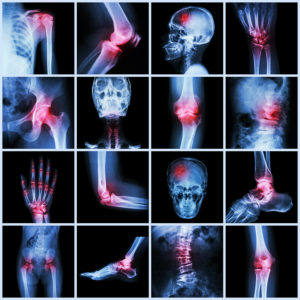
In prior posts, I addressed the psychological diagnoses and medications which may preclude redeployment to CENTCOM following a Defense Base Act injury. This post addresses the physical injuries which may preclude deployment or redeployment. In short, the military wants contractors who have the physical capability of performing their work and completing their mission. The Code of Federal Regulations says as much. See 32 C.F.R. 158.7(k). While it is true that medical waivers may be granted, those waivers are few and far between. In fact, waivers “are unlikely for contractor personnel.” Id. If a contractor wants an waiver for a particular employee, then “an explanation should be given as to why other persons who meet the medical standards could not be identified to fulfill the deployed duties.” Id. So, what are the physical conditions which may preclude deployment? Actually, the Department of Defense has prepared non-exhaustive lists that identify those conditions. The newest version ofRead more
- « Previous Page
- 1
- …
- 3
- 4
- 5
- 6
- 7
- …
- 39
- Next Page »